This is the fourth text in a series of informational notes on the decree amending the Nationality Law, already approved but not yet in force. In previous texts, I addressed Portuguese Nationality Act: amendments approved — what changes?; End of the nationality pathway for parents and ascendants of Portuguese citizens and Civil partnership and nationality: what is changing?

From territorial connection to the duration of parents’ residence
Until now, the rule was relatively clear.
A child born in Portugal to foreign parents not in the service of their respective State could acquire nationality by origin if, at the time of birth, one parent:
• legally resided in Portugal; or
• had been residing in Portugal, regardless of status, for at least one year.
This model corresponded to a mitigated ius soli: it was not enough to be born in Portugal, but a minimal connection to the territory (translated into one year of residence) was sufficient for legal recognition of that belonging.
In practice, it allowed for the legal integration of those who:
• are born in Portugal
• grow up in Portugal
• and build their lives here from the outset
The amendment approved by the Portuguese Parliament on April 1 and sent for promulgation by the President on April 12 shifts this starting point.
The requirement is no longer “one year” or “residence regardless of status.” It becomes five years of legal residence of one parent in Portugal at the time of birth.
Without going into the technical detail of all provisions, the direction is clear:
• access to nationality at birth is no longer based on a minimal connection (such as one year of residence)

• and instead depends on significantly longer periods of parental residence, in line with the broader tightening of legal residence requirements for acquiring nationality
What does this mean in practice, if and when the new regime enters into force?
It means that many children who:
• are born in Portugal
• live, study, and socialize in Portugal
may no longer have access to nationality at birth, even when their entire lives are rooted here.
The criterion shifts away from a real connection to the territory. It becomes the formal duration of the parents’ legal residence.
What changes with the new decree
The role of nationality changes. From an instrument of early integration of the second generation, to the result of a prolonged integration process of the parents.
This has clear consequences:
• delayed legal integration of children who already socially belong
• increased dependence on the parents’ migration status
• more grey areas and legal uncertainty
• potential fragmentation between children born in the same context but with different administrative paths
The system moves away from a model that recognizes belonging based on social reality and shifts toward a more restrictive model, grounded in formal and long-term temporal criteria.
The result is a system in which “time in Portugal” is measured primarily through the parents’ residence status, and far less through the lived experience of those born and raised in the country.
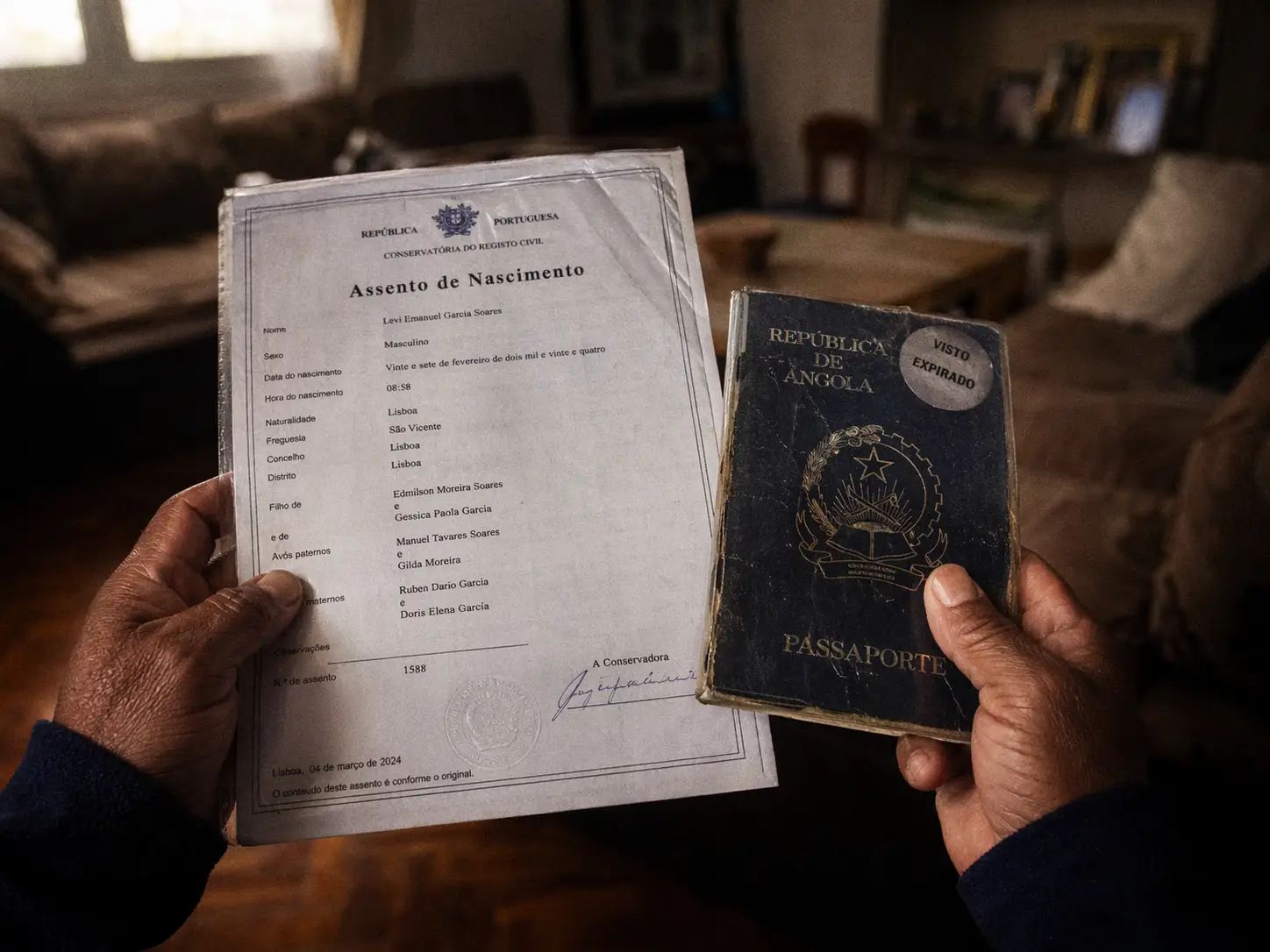
A reversal of legislative trend
Over more than forty years, the rule for those born in Portugal to foreign parents has oscillated between greater openness and strong restriction.
In its original 1981 version, the Nationality Law already provided for this pathway but required parents to have habitually resided in Portugal for at least six years and required the individual to declare their intention to become Portuguese, a clearly restrictive model of mitigated ius soli.
In the 1990s and early 2000s, this declaratory logic remained, combined with long residence periods with valid permits (6 or 10 years, depending on the parents’ origin).
In 2006, the legislator reduced the requirement to five years of legal residence of one parent but still required an explicit declaration of intent, maintaining a high barrier to entry.
A real shift only occurred in 2018 and was consolidated in the current framework: first, reducing the requirement to two years of legal residence and introducing an “opt-out” model (a person born in Portugal is Portuguese by origin unless they declare otherwise), and later lowering the requirement to one year of residence of one parent, even allowing residence “regardless of status.”
The decree now approved by Parliament reverses this trajectory: it again requires five years of legal residence of one parent at birth and reintroduces a declaratory logic (“if they declare that they wish to be Portuguese”), aligning with the 2006 framework and representing a regression compared to the recent trend of early recognition of belonging for those born, raised, and living in Portugal.
It is important to note that the safeguard against statelessness remains: a child born in Portugal who does not possess another nationality continues to be considered Portuguese by origin. The impact of this reform falls mainly on those who, in theory, hold another “paper nationality” but whose lives are entirely rooted in Portugal.

The underlying question
What does it mean, today, to “belong”?
And to what extent does it make sense to deny nationality to those who are born, grow up and live in Portugal based on a temporal criterion that does not depend on the child, but on the parents’ administrative trajectory?
When the law diverges from lived reality, the risk is not only legal. It is also social.